
Laatste update: 02/11/2026
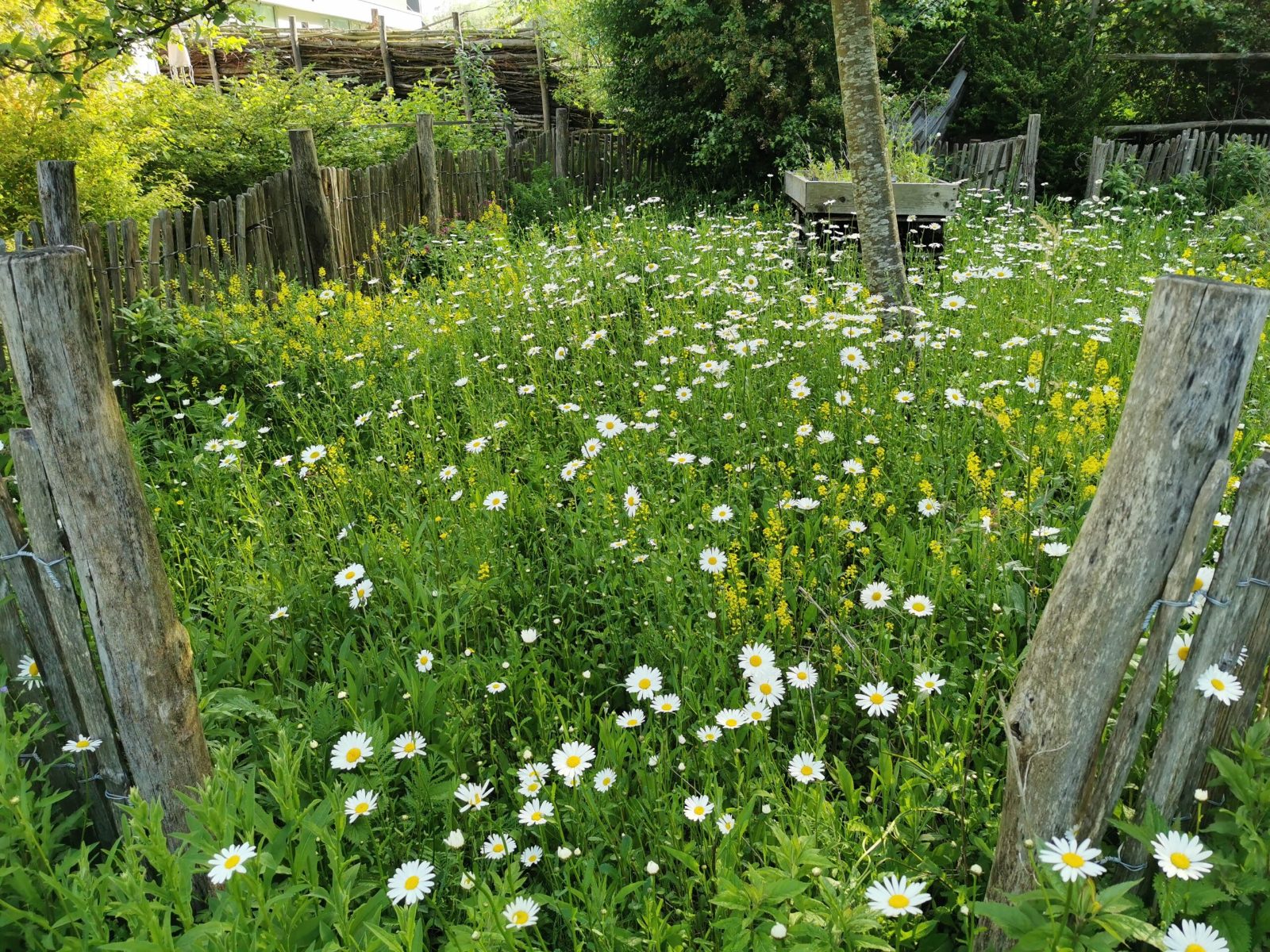
An ecological garden at your accommodation won’t solve the biodiversity crisis. But after the UN biodiversity conference COP17 in Yerevan, the question is: what can we contribute, however small? More than you think, according to Flemish figures. And your guests see it every day.
What COP17 established
At the end of October 2026, countries in Yerevan (Armenia) conducted the first major interim assessment of the 2022 global biodiversity agreement. The conclusion is not a happy one: the world is lagging behind on 22 of the 23 goals for 2030 (Carbon Brief).
A number of those goals are about what happens in gardens: less risk from pesticides, fewer invasive alien species, more and better nature in built-up areas. COP17 didn’t make a specific decision about gardens. But those goals aren’t achieved in a conference hall. They are achieved on every piece of land. Including ours.
Why an ecological garden in Flanders matters
Flanders has more than two million private gardens. Together, they cover about 9% of the surface area (Department of Environment). That is three times as much as all nature reserves combined, and almost as much as all forests. Other studies suggest 8 to 12%, depending on what you count as a garden.
This is important because Flemish nature is highly fragmented. According to the INBO, only 20% of Flanders consists of nature that is well-connected. Gardens can be the stepping stones through which animals and plants get from one nature reserve to another.
Even a small city garden counts. The INBO analyzed thirteen years of butterfly counts in Flemish gardens. Even in small gardens and urbanized neighborhoods, the number of butterfly species increases with every butterfly-friendly element you add. And the European Nature Restoration Law explicitly includes gardens as urban greenery.
Our accommodation gardens together are only a small part of that 9%. Their extra power lies elsewhere: every guest who sees a flowering hay meadow or a hedgehog at your place takes that image home. In 2025, there were nearly 29 million tourist overnight stays in Flanders.
Egological or ecological?
On the Natuurgidsen Klein-Brabant website, Jan De Bock contrasts two types of gardens (An ecological garden). In an ‘egological’ garden, the human is central: the garden must primarily look beautiful and tidy for the owner. In an ecological garden, humans are just a small part of nature, and it’s about what lives there. His page also features the well-known EGO and ECO drawings that capture this difference in a single image.
| Egological garden | Ecological garden |
|---|---|
| Sleek, fertilized lawn, often with a robot mower | Little lawn, a flower-rich grassland that you deplete |
| Purchased ornamental plants and exotics | Native and wild plants |
| Weeding or spraying weeds | Wild plants are allowed to bloom, no pesticides |
| Moles and hedgehogs are a nuisance | Moles are allowed to dig, hedgehogs can pass through |
| Tidied up in every corner | Rough corners with dead wood and branches |
Most gardens fall somewhere between the two, and according to Jan, closer to the egological side. You don’t have to switch to the other side all at once. Each step below moves your garden a little further along.
Seven steps to an ecological garden at your accommodation
1. Measure where you stand
Start with GroenBlauwPeil, a free web tool from the Flemish government, developed together with the Construction Confederation and the knowledge center for municipal water management. You map out your plot and get a score from A to F, with a blue score (rainwater) and a green score, along with tips to improve. A new building according to current standards gets a D; an A is a top example. You can register actions taken, such as removing pavement or planting a tree.
Good to know: GroenBlauwPeil mainly measures how climate-resilient your plot is, not how many species live there. For species, use waarnemingen.be or Natuurpunt’s MyGardenLab. Save your score, before-and-after photos, and your invoices immediately in Documents and evidence. Then you’ll have your proof ready.
2. Choose native, especially for trees and hedges
The difference is huge. More than 400 species of insects live on a pedunculate oak in our regions. On an American oak in Europe, there are fewer than twenty, mostly generalist species. Specialized species such as gall wasps have never even been found on it (Wageningen University). Furthermore, the American oak is invasive: in Flemish forests, it displaces native trees.
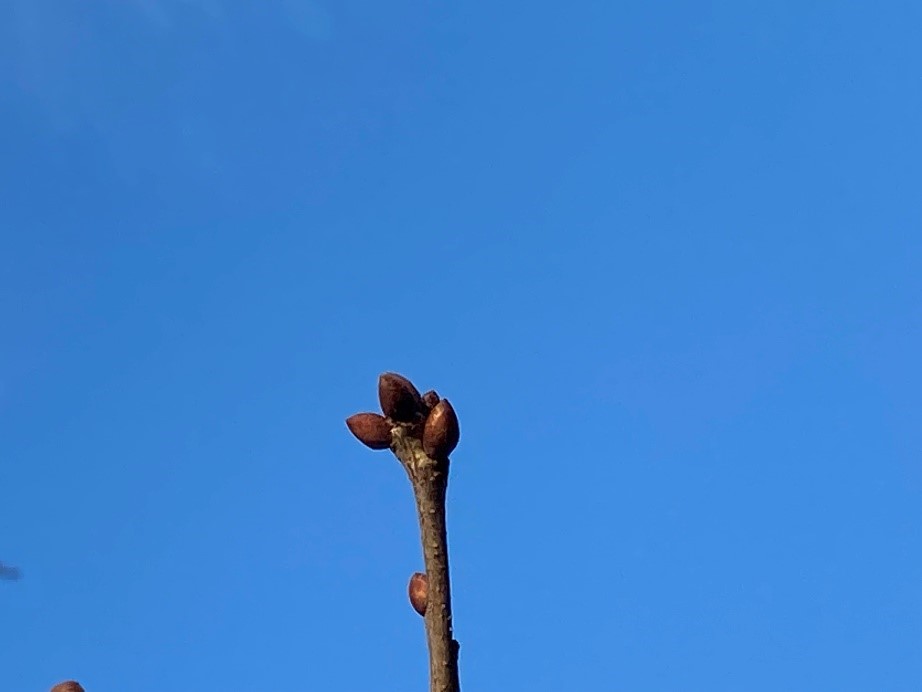
So choose pedunculate oak, hawthorn, blackthorn, hazel, willow, or rowan. From November to March is the planting season for trees and hedges: now is the time.
3. Mow less, but focus on depletion
No Mow May is a good start, but simply not mowing in May yields few extra flowers in the short term. This was shown by a citizen science study by HOGENT in nearly 500 Flemish gardens (VRT NWS). The reason: our garden soils are full of phosphorus, which mainly helps grasses grow well. The best result came from removing a piece of lawn and sowing native flower seeds on the bare soil. After that, mow once or twice a year and remove the clippings so the soil becomes poorer.
4. Remove tiles
According to the CurieuzeNeuzen in de Tuin study, more than a quarter of Flemish gardens consist of paving that doesn’t let water through. Every square meter you depave allows rainwater to soak back into the soil and gives soil life a chance. A parking area for guests can also be made of gravel or grass pavers.
5. Allow rough corners
A brush pile, a stack of dead wood, a corner of nettles for the caterpillars of peacock and small tortoiseshell butterflies, a pond. Put a hole of about 13 by 13 cm in your fence so hedgehogs can move from garden to garden. Such corners cost nothing and require less work than a sleek lawn.
6. Turn off the lights at night
Outdoor lighting disturbs moths and bats. Use motion sensors, warm light, and fixtures that shine downwards. Your guests will still find their way, and they’ll see the stars again.
7. Look over the hedge
The INBO gives garden owners a clear tip: work together across the boundaries of your own garden. Talk to your neighbors, or ask your municipality about the Garden Rangers. In participating municipalities, a volunteer will come on a free ‘garden safari’ and give tailored advice.
How we did it at Scrabble
At Scrabble B&B in the Scheldt Valley National Park, we landscaped the garden ecologically from the start, together with an ecological garden architect. There are many rough areas. In GroenBlauwPeil, our plot scores an A, both for blue (water) and green, as well as on the biodiversity sub-score. According to the tool’s calculation, we collect about 87,000 liters of rainwater every year with our cistern for use, which saves about 435 euros on the water bill.
The structured wild garden is appreciated by many people. As you can see on our site, it attracts many species of animals. Highlights include: kingfisher, roe deer, and polecat.
Tell your guests, without the green talk
Since September 27, 2026, stricter rules for green claims have applied in Belgium (law of July 22, 2026). General words like “ecological”, “environmentally friendly”, or “sustainable” may no longer be used without proof, and a self-made label or badge is no longer allowed. Want to talk about your ecological garden? Then state exactly what you are doing right next to it. You can read about how to approach this in No more “eco” without proof.
Don’t:
- “Welcome to our nature-friendly accommodation.”
- Your own “bee-friendly B&B” logo.
- “With your stay, you support biodiversity.”
Do: a text block for your website or welcome folder. Fill in the brackets with your own details:
Our garden
We mow the grassland behind the house [twice a year], and we remove the clippings so that more flowers grow. In [year], we removed [X] m² of tiles. The hedge consists of [hawthorn, hazel, …]. We use no pesticides and no artificial fertilizer. You can find what we and our guests have seen in the garden at [link to your observations]. Our plot scores [score] in GroenBlauwPeil, a calculation tool from the Flemish government (self-calculated at [datum]).
Let your guests experience it too. Put up a sign saying “We deliberately don’t mow here,” with a mown path around it, so everyone sees it’s a choice and not neglect. Have a magnifying glass or binoculars ready. Ask guests to report what they see on waarnemingen.be, or refer them to a nature walk with a local guide.
Want to go further with a recognized label? The new Green Key criteria, in effect since October 1, 2026, include a section on biodiversity protection. You can read more about labels in Certification as a learning path.
Your turn
An ecological garden is never finished, and that’s exactly the beauty of it. You can find more tips about gardens and greenery on our page Sustainable garden and green management.
What grows or lives in your accommodation’s garden that guests ask about? Share it in the community.
Sources: Carbon Brief (COP17, October 2026); Department of Environment (gardens in Flanders); INBO (Biodiversity Day 2026, Garden Butterfly Counts 2007-2019); Statistics Flanders (overnight stays 2025); Wageningen University (insects on American oak); VRT NWS (HOGENT FlowerPower 2024, CurieuzeNeuzen 2021, American oak Haacht 2025); Groenblauwpeil.be; law of July 22, 2026 (EmpCo).

