
Laatste update: 09/06/2026
Sustainability can be viewed from different perspectives. But what is the daily impact for a sustainable operation ?
Some call the daily operational cycle of a host somewhat debauched: the choreography of hospitality. We want this choreography to be as sustainable as possible. Below is an example of a B&B (with breakfast, without lunch or dinner)
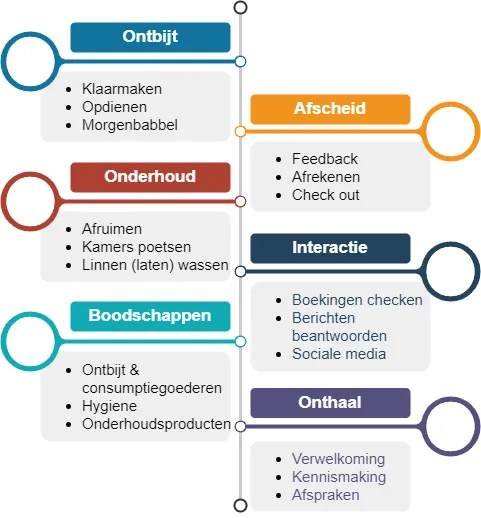
In each of these steps, you can act less or more sustainably.
Breakfast
Preparing
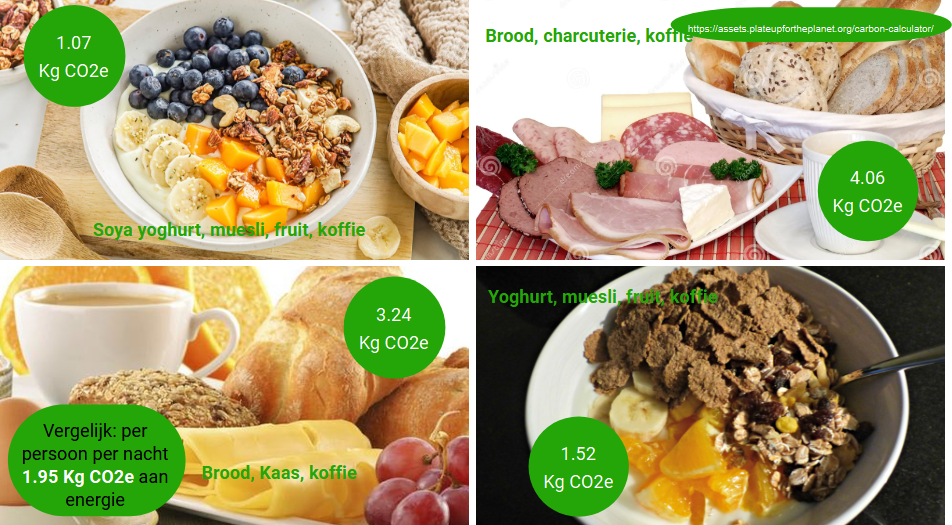
In many lodgings, breakfast already creates a greater impact than all the energy combined during the stay (heating/cooling/sanitary hot water/lighting …). The choice of ingredients is important. The more animal products the greater your emissions. To check how much you emit with your breakfast: take a look at this site. Would you like us to do an analysis? That’s also possible. Surf to our Sustainability Analysis offer.
Serving
While serving and setting the table, you already take into account guests’ wishes whenever possible. But you also take into account your accommodation’s sustainability commitments.
- As little individual packaging as possible (butters, jam jars, yogurts, cookies, sugars, etc.)
- No disposable crockery
- Paper napkins are best not to place on each plate, but offer them in a napkin holder on the table. That way you avoid ‘unused’ waste.
Note that these are also criteria for just about every major sustainability label.
Morning Chat
The morning chat is ideal for gauging guest satisfaction. It’s also the time to explain a bit about what’s on the table. Sometimes people are interested in the story behind it, sometimes not at all. It’s sometimes a fine line to walk here.
Discuss it with us in our forum.
Farewell
Checking out is another one of those interesting moments where some hosts take the time to talk about the impact of the stay and the entire trip and to talk about possible (carbon) offsets.
Anyway, it’s a final moment to poll not only what they thought of the lodging, but also the neighborhood and area. This can provide valuable feedback for future guests.
Maintenance
Clearing
Clearing the breakfast table(s) is most sustainable if as little residual waste as possible is generated. So sorting is very important here. The leftovers on the plates could go on the compost heap? Or maybe they can be given to the chickens?
Cleaning rooms
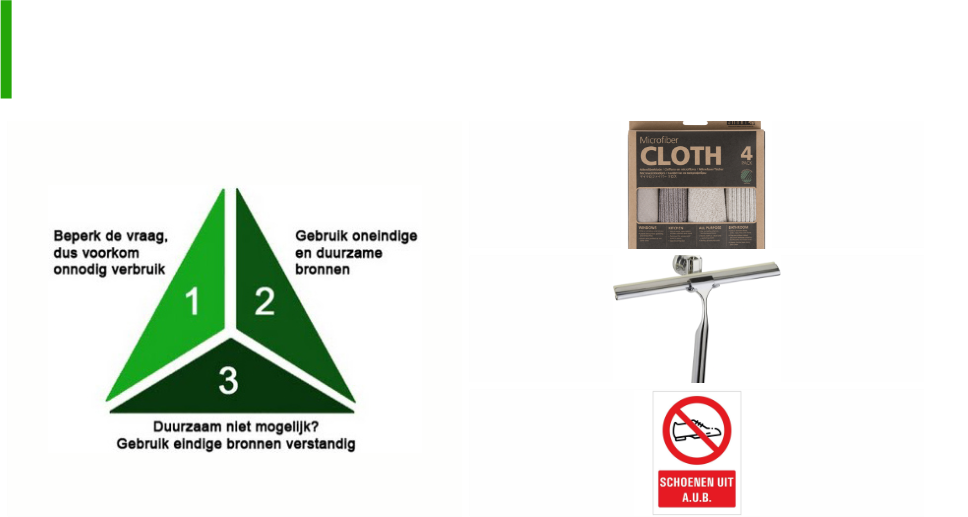
You can see the trias ecologica schematically presented below. You could also refer to it as: better prevention than cure.
3 examples:
- If you ask your guests to take off shoes, you’ll have a lot less cleaning to do
- If you hang a a shower wiper, you are much more likely to use it and have less scale build-up
- If you use microfiber cloths you don’t need (chemical) maintenance products
Give us more tips on how best to clean ecologically via our forum
Washing bath and bed linens
Again, there are many options. Do you wash yourself or outsource? Do you wash with rainwater? Do you let it dry naturally or do you use a drying greenhouse? How much and what laundry products do you use?
Many questions and even more answers: read along on our discussion pages
Interaction
Interaction is now mostly digital. In the context of sustainability, it is important to pay attention to “Green-IT.” Infrastructure decisions are not in daily operations.
But there are ways because to do it as efficiently as possible within any environment.
- Are you using AI? Then take a look at these guidelines.
- Avoid Reply-All whenever possible; it creates unnecessary mail traffic and is inefficient.
- Use as few images as possible in your communications
In your communication, you can also already start with info about your approach. Best indirectly, by emphasizing the positive aspects of ecological choices.
Shopping
Buy less, buy better. By already thinking about the “end-of-life” of a product at the procurement stage (can it be recycled? is it biodegradable?), you avoid having a huge waste stream later on at the “Maintenance” step.
For breakfast and other consumer goods: think short-chain, packaging-free and seasonal. But don’t do that blindly. Sometimes something from a little further away is better than local. Also consider Fairtrade and organic-labeled products.
For care and maintenance products, it’s best to take refillable dispensers. Again, it’s best to look for ecologically labeled products.
Welcome
The Welcome is the key moment for sustainability. After all, this is the stage where you set expectations and bring the guest into your vision. Without a good welcome, your sustainable efforts (such as solar panels or water-saving faucets) often go unnoticed or are misused.
In this step, make sustainability a welcoming experience rather than a list of prohibitions.


